From its very beginning, South Park has consistently challenged boundaries. The long-running animated program originated as a collection of short films, crafted from construction paper and circulated via VHS tapes. The second of these famously depicted a showdown between Jesus and Santa Claus disputing ownership of Christmas. Once commissioned as a full series, it promptly continued this provocative trend, exemplified by its debut episode, “Cartman Gets an Anal Probe,” which paved the way for “Mecha-Streisand” and numerous other shockingly bold moments in its inaugural season. Across 28 seasons, the creators have shown no inclination to soften their approach or reduce their intensity.
However, today marks a pivotal moment in the contentious history of South Park, commemorating the first time the series ever faced censorship upon its initial broadcast, an episode that remains prohibited to this day. On April 21, 2010, fourteen years ago, South Park released “201.” This not only represented the 201st installment of the series but also resolved several significant plotlines from previous episodes. Among these narratives was the portrayal of the Prophet Muhammad, an element that ignited a fierce backlash, prompting death threats against the creators and leading the parent corporation to impose active censorship.
South Park Episode “201” Was Controversial Before It Even Aired
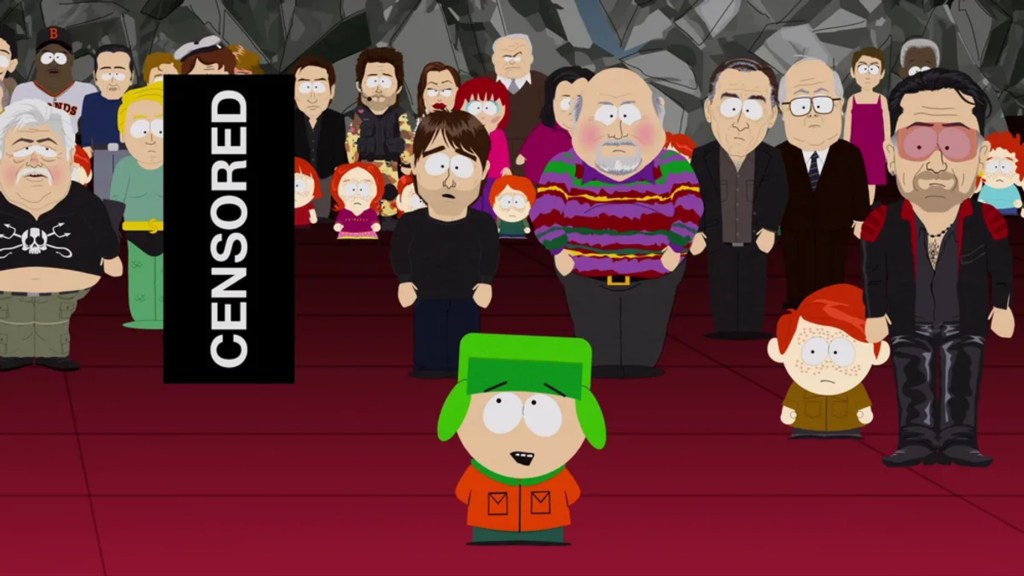
“201” continued directly from the suspenseful ending of “200,” the episode that initially triggered the uproar surrounding South Park. In the preceding episode, a collective of celebrities threatened a lawsuit against the town but offered a truce if the Prophet Muhammad was delivered to them. The townspeople were, understandably, hesitant due to the prohibition of depicting Muhammad in the Muslim faith and the perceived risk of violent repercussions. Throughout “200,” Muhammad remained out of sight, either heard from behind a closed door or concealed within a large mascot costume; however, it was widely anticipated before its debut that “201” would fully reveal his likeness.
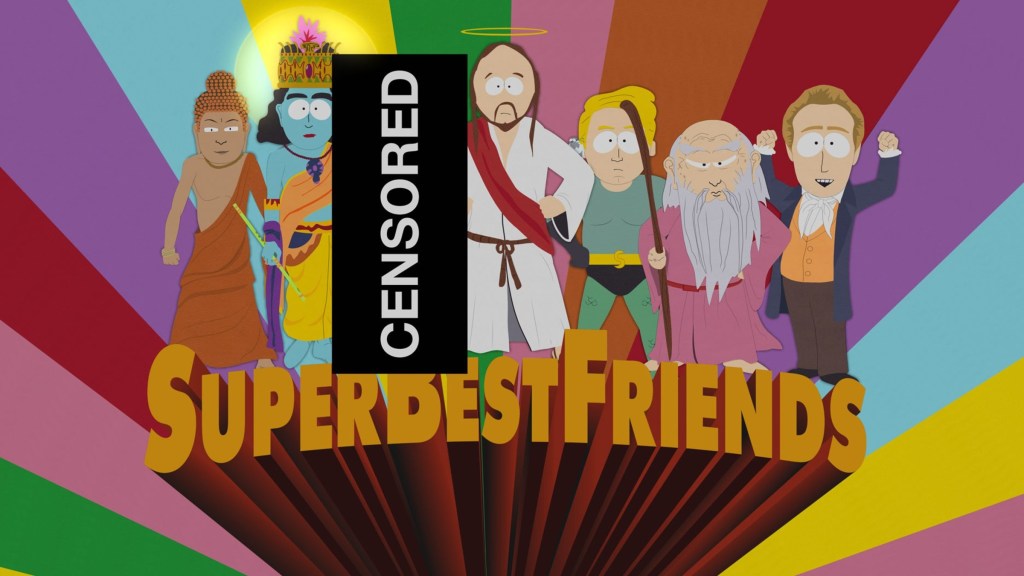
This particular controversy was, ironically, rather absurd at the time, given that South Park had previously shown Muhammad in a much earlier episode, “Super Best Friends,” from Season Five, without any public outcry. Nevertheless, Revolution Muslim (a defunct extremist organization based in New York) issued a subtly threatening message, stating that creators Trey Parker and Matt Stone “are doing is stupid and they will probably wind up like Theo Van Gogh for airing this show.” (Theo Van Gogh was a Dutch filmmaker murdered after directing a short film critical of the treatment of women in Islam.) This statement, coupled with the broader apprehension among media companies about depicting Muhammad, swiftly ignited a major dispute, polarizing opinions between those who believed “South Park shouldn’t do that” and those who argued “South Park should have the freedom to do that.”
Consequently, significant attention was focused on “201” upon its broadcast, leading to higher viewership than episode “200.” However, when the episode aired, it was presented with extensive censorship: every mention of “Muhammad” was bleeped out, the character himself was obscured by a large black “Censored” bar, and the concluding monologue designed to resolve the storyline was also muted (with over thirty seconds of the episode, including multiple characters’ dialogue, entirely censored).
Initially, some viewers speculated that the censored elements were an intentional comedic device, only for the South Park team to confirm the following day that all censorship decisions were made by Paramount/Viacom after the episode was delivered. In a statement on their South Park Studios website, the creators verified that Comedy Central “added the bleeps” to the episode, including a crucial line from Kyle that itself critiqued the act of yielding to the threat of violence.
“I learned something today. Throughout this whole ordeal, we’ve all wanted to show things that we weren’t allowed to show, but it wasn’t because of some magic goo. It was because of the magical power of threatening people with violence. That’s obviously the only true power. If there’s anything we’ve all learned, it’s that terrorizing people works.”
South Park’s “201” Remains Banned
Following its initial broadcast on April 21, 2010, “201” was removed from the rotation of syndicated South Park episodes and has never been re-aired in the United States, a situation that persists today. Not only was it absent from television schedules, but the episode was also taken down from South Park Studios, where fans previously could stream episodes of the show uncensored. As one might anticipate, the episode was completely unavailable on the platform, even with its censored portions. While “201” was included in the DVD releases of the seasons, these versions retained the censored elements. Eventually, an uncensored iteration of “201” found its way online and can still be readily discovered on the internet. However, to this day, “201” remains inaccessible for streaming and cannot be purchased through digital platforms.
Across its hundreds of episodes spanning 28 seasons, along with a feature film and seven streaming specials, South Park has only five episodes officially banned from television broadcast or streaming. This held true during its time on HBO Max and continues since its move to Paramount+. Ironically, all five of these episodes share a common theme. In addition to “201,” the list of banned South Park episodes includes “200,” the aforementioned “Super Best Friends,” and the two-part “Cartoon Wars Part I” and “Cartoon Wars Part II.” As might be expected, every one of these five episodes either depicts or makes specific reference to Muhammad.
It is quite revealing that, despite generating countless controversies and provoking numerous organizations and even countries throughout its vast catalog, there remains only one boundary that South Park’s parent company has deemed inviolable. Nevertheless, for discerning fans who know where to look, the complete, uncensored material is readily available, demonstrating that censorship of this magnitude often proves ineffectual, especially when it contradicts the very message the narrative intends to convey.