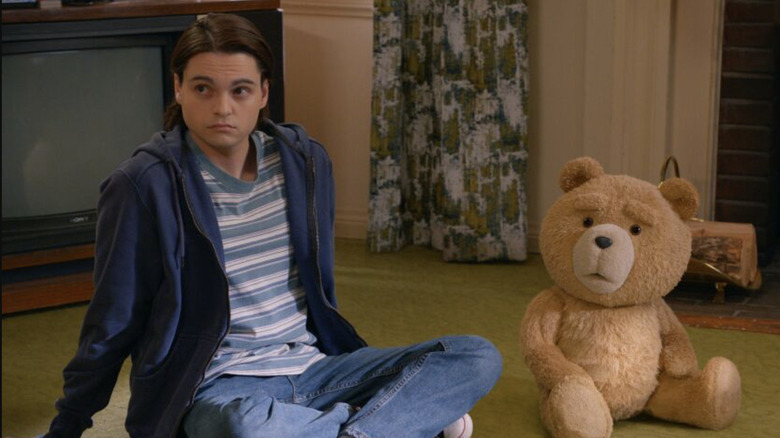
This article includes minor spoilers for “Ted” season 2.
How effectively does “Ted,” the Peacock prequel series derived from the two theatrical films of the same name, portray its iconic main character – a walking, talking teddy bear voiced by creator Seth MacFarlane? The portrayal is so seamless and believable that it’s easy to overlook the immense cost involved. Over the past few decades, we’ve grown accustomed to fully CGI creations serving as central figures, a development so successful that many viewers accept these characters without fully grasping the extensive effort behind them.
The unfortunate truth behind the triumph of characters like Ted is that their creation demands substantial financial investment. MacFarlane recently highlighted this point in an interview with The Wrap concerning the prospect of a third season, coinciding with the release of the second season on Peacock. While neither the streaming platform nor MacFarlane has made a definitive statement, MacFarlane indicated that “there’s no plan … at the moment to do season 3.” He further explained, “What I kept hearing [from Peacock and Universal] was, ‘Listen, the show is really expensive to produce, and there’s no way to do it at a lower cost.'”
Considering Ted’s pivotal role in the series, this explanation seems reasonable. The positive news is that MacFarlane and the series’ showrunners have contingencies in place for whatever unfolds. However, a particular decision made in season 2 might suggest that the production team could be overly reliant on visual effects.
The Extensive Use of AI for Bill Clinton’s Cameo in ‘Ted’ Season 2 Appears Excessive
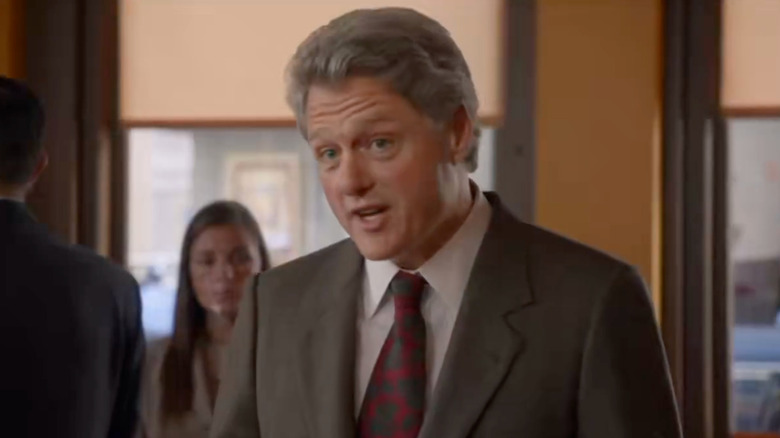
In the fifth episode of “Ted” season 2, Seth MacFarlane took on the role of former President Bill Clinton for a brief cameo. As MacFarlane disclosed to The Wrap, this portrayal was achieved through a fusion of his impressive vocal impersonation and AI technology (MacFarlane’s comments didn’t specify the AI type, but it’s likely a machine learning/deepfake application to replicate his likeness, akin to effects seen in “Rogue One: A Star Wars Story” and “Alien Romulus”). MacFarlane then articulated why he and the “Ted” showrunners deemed this approach optimal:
“Had we gone the traditional CGI route, which we did try, it was just terrifying to look at. […] So we used the AI method. The CGI was distracting from the jokes, you were focusing on the effect rather than the writing. We want people focused on the writing. So it was an interesting use and interesting glimpse into the future. It’s like, here’s AI used as a tool the same way that we use CGI or stop motion or any other tools to best bring our writing to life.”
While MacFarlane’s reasoning initially sounds plausible, its validity diminishes when considering the nature of this cameo. Clinton is undeniably a recognized public figure, yet his photorealistic depiction isn’t crucial for a comedic bit in a series. Couldn’t MacFarlane have simply played the part himself with minimal prosthetics, much like John Travolta in “Primary Colors” or Phil Hartman on “Saturday Night Live?” Perhaps “Ted” and MacFarlane are so accustomed to employing animation and visual effects that more budget-friendly alternatives are overlooked.
Regardless of the ‘Ted’ Series’ Fate, MacFarlane and Team Have Future Plans
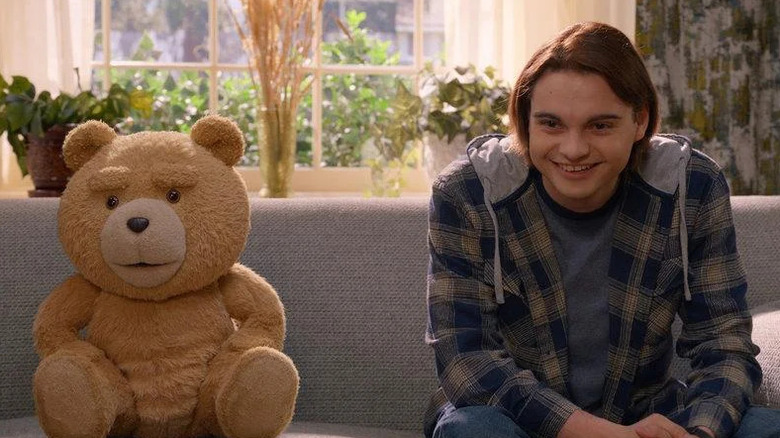
Fortunately for admirers of “Ted,” the future appears promising for the profanity-laced teddy bear, irrespective of what transpires with the live-action prequel series. Regarding a potential third season, Seth MacFarlane detailed how, despite him and the showrunners crafting a conclusive ending, it might still be possible to alter or extend it:
“I wrote the last scene with Max [Burkholder, who plays John] walking into a gym, presumably coming out as Mark Wahlberg in the first ‘Ted’ film. So [showrunners] Brad Walsh and Paul Corrigan and I kind of painted ourselves into a corner. Is there a way to do it? There’s always a way to do anything. But at the moment, it might take some narrative acrobatics.”
After all, the entire “Ted” series unfolds between the initial flashback sequence and the contemporary setting of the first movie, demonstrating the franchise’s prior capacity for narrative flexibility. Moreover, MacFarlane, Corrigan, and Walsh are expanding the “Tedverse” in both storyline and format, with a new animated series set after “Ted 2” slated to arrive on Peacock at an unspecified future date. Thus, even if a third season of the live-action “Ted” doesn’t materialize, the franchise itself seems far from over. As such, pre-bear yourself for more “Ted” in the future.